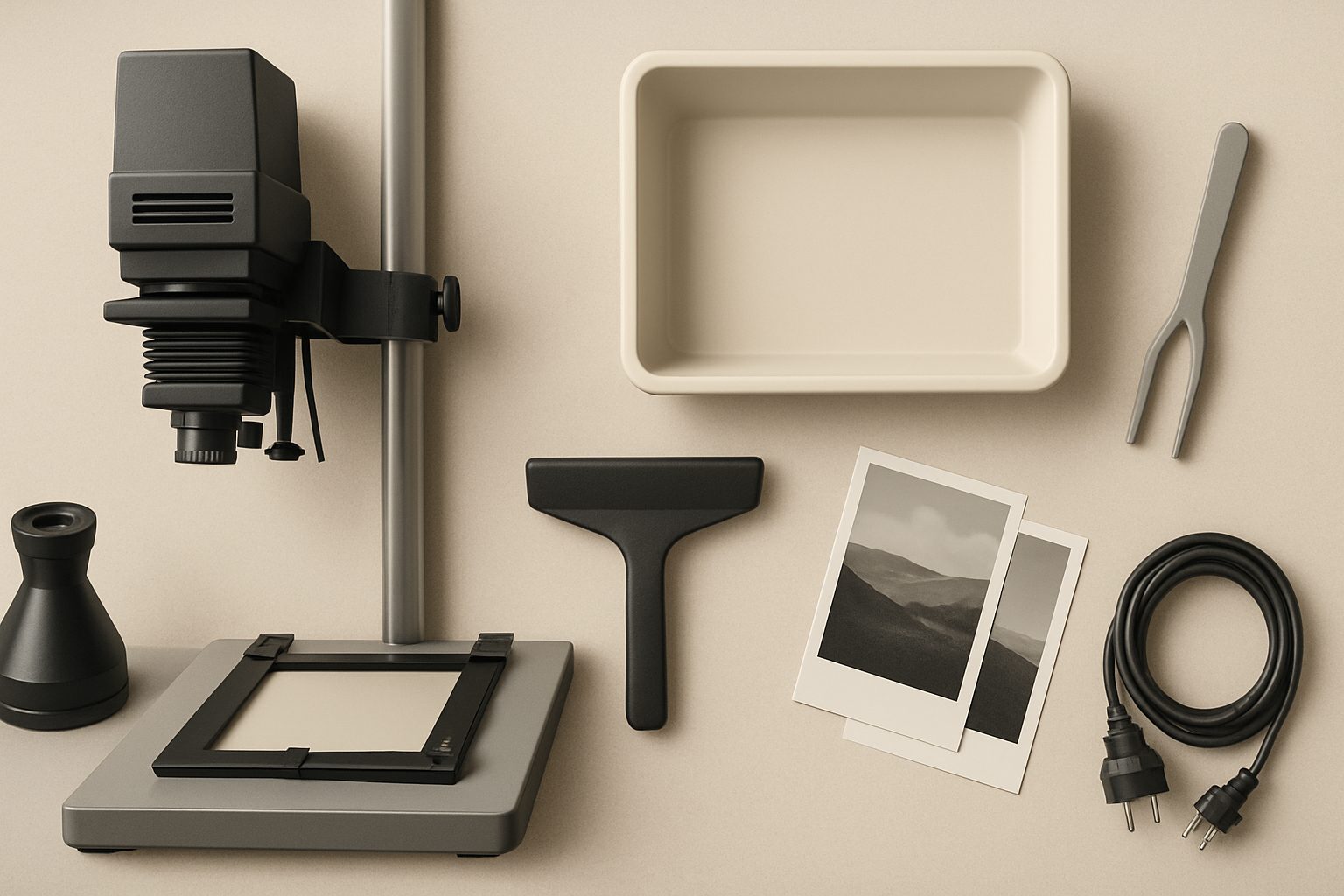
Best Budget Darkroom Enlargers Under £200 in the UK
Finding a working darkroom enlarger under £200 in the UK is possible, but it requires patience and realism about what you're buying. Most enlargers in this price bracket are second-hand, often decades old, and they work best for black-and-white printing rather than colour. The upside is that quality build is rarely the issue—many vintage enlargers from the 1970s and 1980s are still mechanically sound if properly maintained.
What You'll Actually Find at This Price Point
Under £200, you're looking almost exclusively at used equipment. New enlargers from established brands start around £300–£400 minimum. The good news is the second-hand market is still active because darkroom photography has seen a modest resurgence among film enthusiasts.
Most sub-£200 options are condenser enlargers rather than diffusion models. Condenser enlargers are lighter, take up less space, and are generally cheaper. They produce higher contrast prints and require careful focus, but they're perfectly adequate for home darkroom work.
Enlarger Models Worth Targeting
Paterson enlargers are the sweet spot for budget buying. Paterson manufactured enlargers across several series—the Paterson 45 and Paterson 35 are common finds in the £80–£150 range. They're robust, parts are still available online, and they handle 35mm film well. The mechanics are straightforward, which means fewer things to go wrong.
Kaiser enlargers from their Standard or Enlarger 45/67 series sometimes appear under £150. These are German-made and built solidly, though finding one in good condition requires checking classifieds and specialist photography forums regularly.
Vivitar enlargers are less common now but occasionally surface on eBay. They're typically reliable machines, though spares can be harder to source than Paterson parts.
Durst enlargers, particularly older models like the Durst L138, sometimes fall into this price range. They're heavier and take more space but are excellent performers for the money.
Avoid models with missing or damaged condensers, as replacement condensers can cost £50–£100 alone and may not be available for obscure brands.
Where to Find Them
eBay UK is the obvious starting point. Search "enlarger" or "darkroom enlarger" and filter by price and location. Use saved searches to monitor listings—many good deals appear and sell quickly. Local pickup saves postage costs, which matter for heavy equipment.
Facebook Marketplace and local selling sites like Gumtree sometimes have better prices than eBay, particularly from sellers unaware of actual demand. Private sellers often underprice equipment.
Photography forums and dedicated film photography communities (like the UK's own Photography Talk forums) have classified sections where members buy and sell directly. These often bypass eBay fees and shipping costs.
Local camera shops occasionally have used stock, especially independent shops rather than high-street chains. Building a relationship with them can help if something becomes available.
What to Inspect Before Buying
Before committing money, check these essentials:
The lens. This is critical. Look for fungus (grey or brown spots inside the glass—common in damp storage) and scratches. A lens with mild dust is fine; fungus reduces image quality significantly. Ask the seller for a photo of the lens against a light source.
The condenser. Make sure both condenser lenses are present and intact. Cracks or missing elements are dealbreakers at this price point. Scratches and minor dust are acceptable.
The bellows. Check for light leaks by looking inside with a torch. Pinholes and small tears in the bellows can be patched with paint or bellows repair kits (available for under £15), but extensive damage is a problem.
Focusing mechanism. Wind the fine focus up and down several times. It should be smooth, not stuck or grinding. Some stiffness is normal; grinding or resistance could indicate worn gears.
The timer. Darkroom timers aren't always included, but if one is attached, check it's working. A non-functional timer is a minor issue—separate timers are affordable.
Electrical cord and safety. Make sure there's no visible damage to the power cord. In the UK, the plug should be a standard three-pin UK plug. Older plugs can be replaced, but check the wiring is sound.
Essential Accessories on a Budget
Your enlarger is only part of the setup. You'll need a few more things:
An enlarging lens should come with the enlarger, but verify this before buying. Standard 50mm lenses for 35mm printing are normal.
A focus finder or magnifier for critical focus will cost £8–£20 and saves enormous frustration. Cheaper than darkroom lumens wasted on out-of-focus prints.
Masking frame (also called an easel) is essential. Used ones appear regularly under £20. New ones from Amazon UK or specialist suppliers cost £30–£50.
Safelight is necessary. An amber or red safelight designed for black-and-white work costs £15–£30.
Darkroom timer: a second-hand photographic timer or a simple darkroom-specific digital timer runs £12–£25 on Amazon UK.
Print paper and chemicals are where real costs accumulate over time, not the enlarger itself.
Final Considerations
An enlarger at £120–£180 that works is better than a bargain priced at £60 that requires repairs. Don't chase the cheapest listing; prioritise condition and testability. If you can visit in person, do so. If buying remotely, ask specific questions about the lens and bellows.
Most importantly, vintage enlargers are designed to last decades. If you're buying from someone who's simply clearing out a shed rather than a failing machine, odds are reasonable you'll get reliable service for years of darkroom work.
More options
- Darkroom Enlargers (various brands) (Amazon UK)
- Enlarger Lenses (El-Nikkor, Rodagon, Componon-S) (Amazon UK)
- Darkroom Timers & Exposure Meters (Amazon UK)
- Ilford Multigrade Darkroom Paper (Amazon UK)
- Darkroom Starter Kits & Accessories (trays, easels, chemicals) (Amazon UK)